


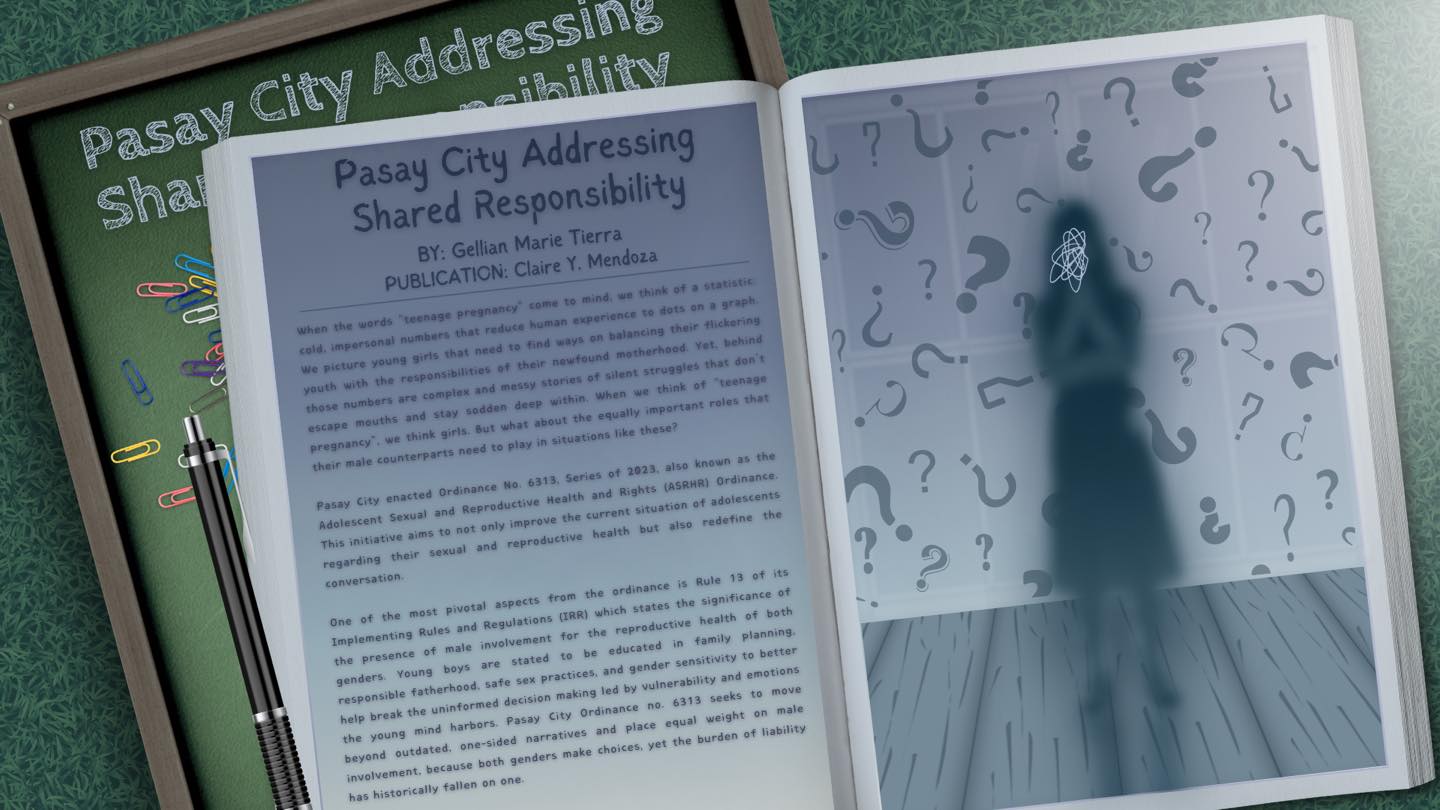
By: Gellian Marie TierraPublication: Claire Mendoza When the words “teenage pregnancy” come to mind, we think of a statistic: cold, impersonal numbers that reduce human experience to dots on a graph. We picture young girls that need to find ways on balancing their flickering youth with the responsibilities of their newfound motherhood. Yet, behind those numbers are complex and messy stories of silent struggles that don’t escape mouths and stay sodden deep within. When we think of “teenage pregnancy”, we think girls. But what about the equally important roles that their male counterparts need to play in situations like these? Pasay City enacted Ordinance No. 6313, Series of 2023, also known as the Adolescent Sexual and Reproductive Health and Rights (ASRHR) Ordinance. This initiative aims to not only improve the current situation of adolescents regarding their sexual and reproductive health but also redefine the conversation. One of the most pivotal aspects from the ordinance is Rule 13 of its Implementing Rules and Regulations (IRR) which states the significance of the presence of male involvement for the reproductive health of both genders. Young boys are stated to be educated in family planning, responsible fatherhood, safe sex practices, and gender sensitivity to better help break the uninformed decision making led by vulnerability and emotions the young mind harbors. Pasay City Ordinance no. 6313 seeks to move beyond outdated, one-sided narratives and place equal weight on male involvement, because both genders make choices, yet the burden of liability has historically fallen on one. An example of the absence of male involvement is the all-too-common misconception that teenage pregnancy is solely a “woman’s issue,” as if the responsibility should rest entirely on the young mother while the father remains a footnote in the narrative. This inaccuracy leads to the limited awareness and accountability of their male counterparts, reinforcing a toxic cycle. However, starting to address common issues that linger in this age group creates a difference, especially when handled early. The IRR, rather than merely addressing the consequences, forwards the idea of averting away from possible problems. It promotes early education on contraception, family planning, and the consequences of unprotected sex. Additionally, there are programs included that create discussions on gender sensitivity, life skills, co-parenting, and prevention of gender based violence. These efforts reinforce that reproductive health is a shared responsibility. The ordinance takes a proactive rather than a reactive approach by empowering young men with the right knowledge that can contribute to their character now and in the future, safer relationships and greater respect in partnerships, and the reduction of early pregnancies. The underlying message is how to lean on preventive measures rather than expecting a solution when irrevocable damage has been done. At its core, the ASRHR ordinance is not just a legal framework, it is an initiative by Pasay City and a catalyst for the progression of sexual and reproductive health education. It serves as a commitment to nurturing burgeoning minds with awareness, responsibility, and inclusivity. Because real progress is not about assigning blame, it’s about ensuring that everyone is equipped to traverse through complexities of relationships, decision making, and creating character with integrity and ethics.

Backburner
By: Xhian Miguel AlsolaCartoon: Mark Lorenzo Sales Editor’s Note: The following article does not reflect the views and opinions of the Pasay City National Science High School faculty, administration, and stakeholders. In a recent ambush interview, President Ferdinand Marcos Jr. stressed that the 2025 national budget is sub-optimal and that the country is already working hard to remedy the problem. A problem that extends to the education sector as a result of the approval of the budget plan despite it being in complete shambles. The passing of the General Appropriations Act (GAA) 2025 was already a heated topic for controversy not too long ago. Marcos’ statement simply proves exactly why. It is never a good sign when even the president of the country admits that the national budget, the foundation of the nation’s future, is flawed. The Department of Education (DepEd) makes a great case for being the biggest victim, as the budget treats its title as being the top priority like a joke. Despite Marcos emphasizing several times that Philippine education must advance, DepEd fund allocation receives no significant increase. Expecting further development in the education sector when support stays stagnant is utter stupidity. After all, new output is impossible without new input. The future looks bleak as it is much too late for any budget amendments, coercing the authorities to scour for any and every possible source to boost funds for departments in need. This is the only way out, however, as the authorities must pull out all the stops and cover budget gaps by any means possible. It is inevitable that savings will be tapped into. Throughout the entire fiasco, the student body takes the brunt of the force. Students and scholars of the country have no need for a “sub-optimal” support system in budget form. The country must pull itself back up by recognizing its priorities and showing them through appropriate action. As of now, it is unclear whether the nation sees its students as the future or a secondary concern fit for the backburner.
L-PRICE: Utilizing Linear Programming in Optimizing Rice (Oryza Sativa) Profit Through Production Cost and Return in Central Luzon
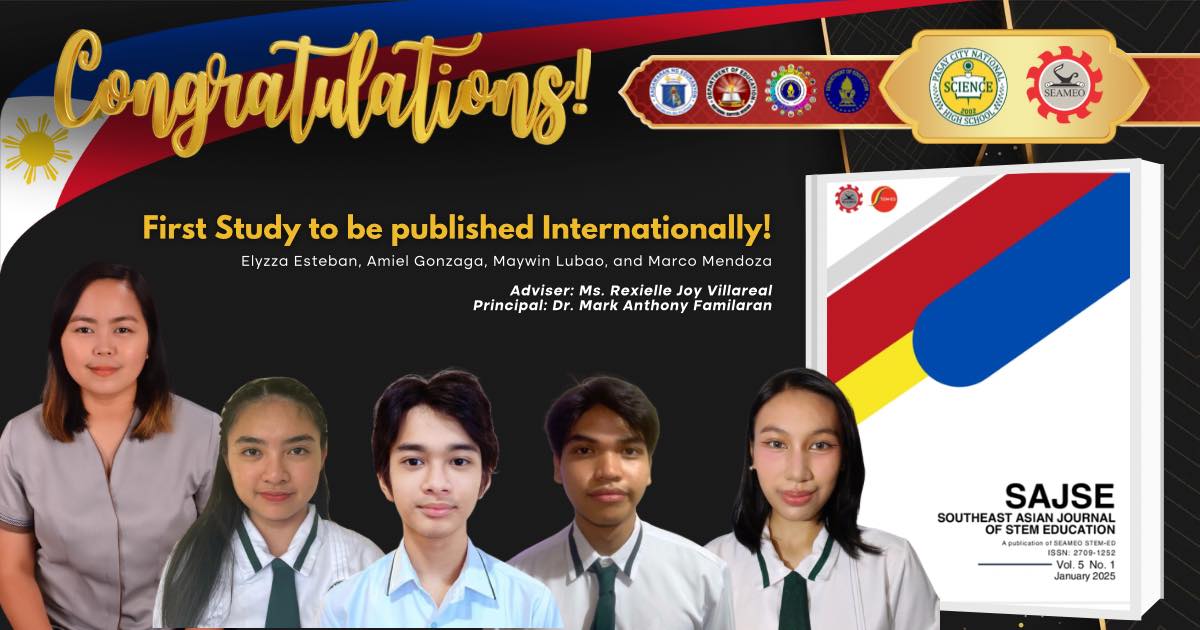
More than two years since Pasay City National Science High School introduced the Mathematics and Computational Sciences category in its annual research studies, the first internationally published study is now here. Titled “L-PRICE: Utilizing Linear Programming in Optimizing Rice (Oryza Sativa) Profit Through Production Cost and Return in Central Luzon,” the study, proposed by Elyzza Esteban, Amiel Gonzaga, Maywin Lubao, and Marco Mendoza, developed an optimal solution for maximizing rice profits in Central Luzon while minimizing production costs. Under the expert guidance of Ms. Rexielle Villareal, their work has been successfully published in the Southeast Asian Journal for STEM Education, marking a significant milestone for our student-researchers and the school’s research community. Congratulations from The Quantum family!
Pascians shine at Damath tilt
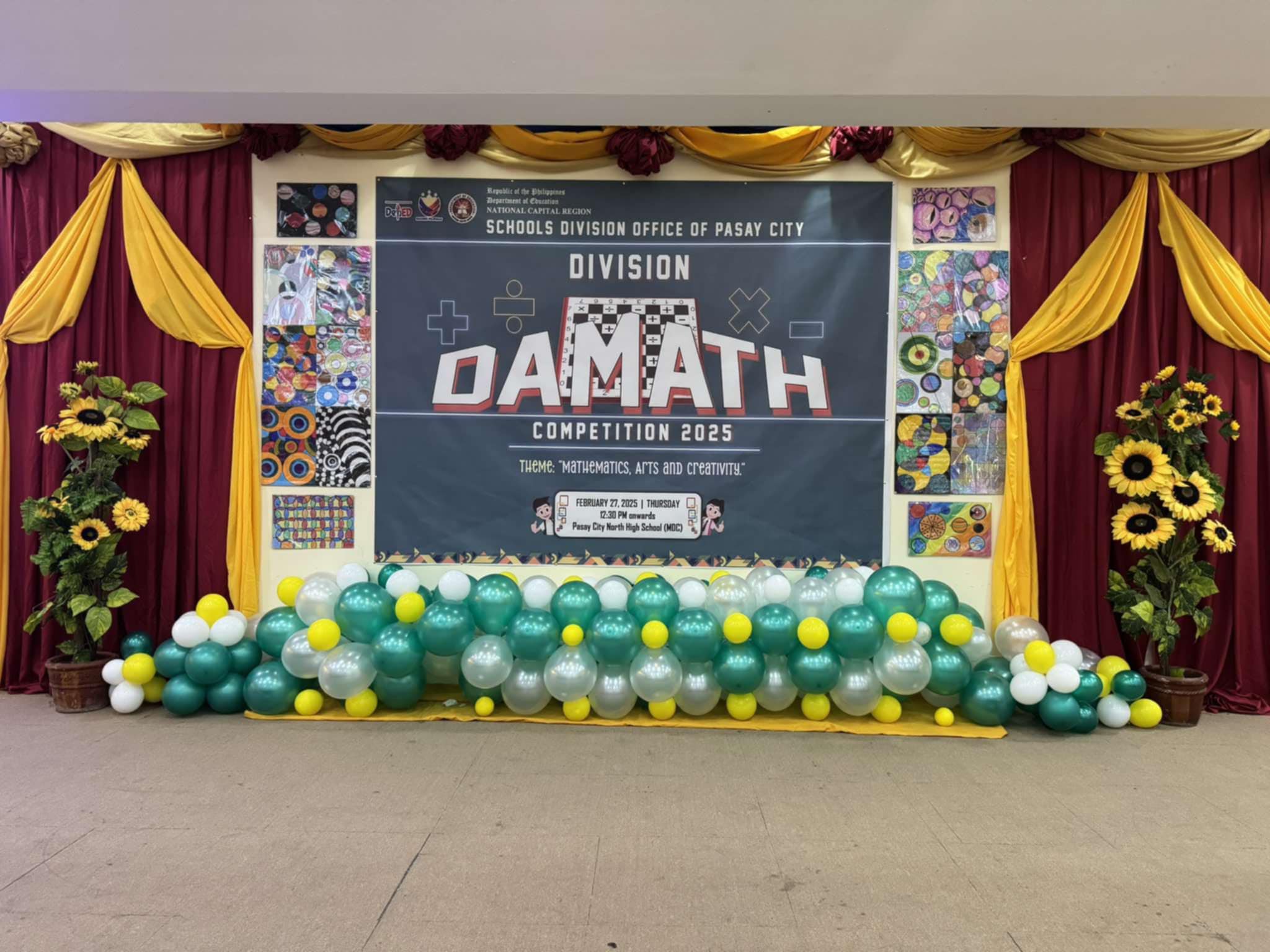
Photos: Mrs. Arlyn Esber and Ms. Marry Camile Landagan Pascians shine at Damath tilt With bright tactics and swift moves, students of Pasay City National Science High School bagged numerous awards in the Division Damath Competition yesterday, February 27. Chrisanto Domingo Jr., trained by Ms. Marry Camile Landagan, bagged the top spot in the Senior High School category and is expected to compete in the regionals on the 15th. John Roy Benzon, Charles Matthew Andres, and Christian Dave Tabada all took 3rd Place in Grades 9, 8, and 7 levels. They were trained by Ms. Chiradee Ong-Javiniar and Mr. John Brian Pacris.

A Race to Remember!
#ElecTQ | A Race to Remember! With a staggering 93.1% voter turnout, this year’s SSLG elections delivered one of the tightest and most intense battles in recent history. The presidential race came down to a razor-thin margin, with President-elect Filha Ray Penelope Bautista delivering 53.5% of votes and re-electionist Michiko Yamamoto securing 46.5% of the votes, proving just how divided yet engaged the student body was in choosing its next leader. Meanwhile, the secretarial showdown saw another neck-and-neck fight, as both candidates pushed for every last vote. Across all positions, candidates fought fiercely for student representation, making this election a true testament to Pascian democracy. As the dust settles and the winners step forward, one thing is clear—every vote mattered. Congratulations to the newly elected student leaders, and thank you to every Pascian who made their voice count!
2025 Regional Schools Press Conference and Contests
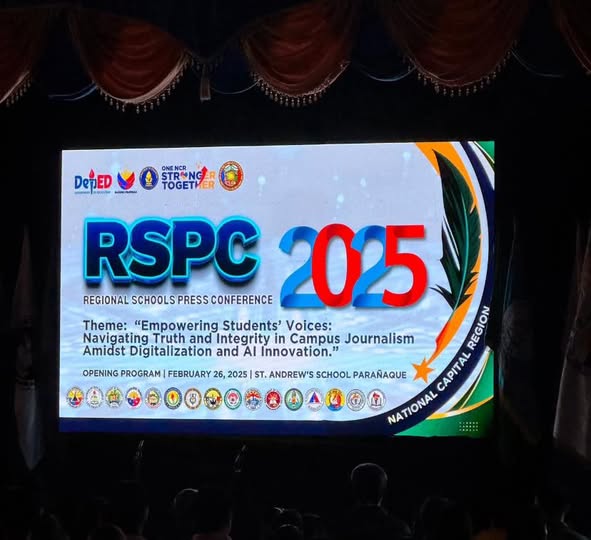
Mga larawan ni G. Mark Balolo Sa unang araw ng 2025 Regional Schools Press Conference and Contests, patutunayang muli ang husay ng mga mag-aaral ng Pasay City National Science High School bilang kinatawan ng Dibisyon ng Pasay sa indibidwal na kategorya. Binubuo ito nina: (FILIPINO) – Zacharie Macalalad para sa Pagsulat ng Balita; – Carl Chua para sa Pagsulat ng Balitang Isports; – Jacqui De Gueño para sa Pagsulat ng Agham at Teknolohiya; – Joebbie Gaugano para sa Pagwawasto ng Sipi at Pag-uulo ng Balita; at – Mervyn Valdez para sa Pagkuha ng Larawan (ENGLISH) – Xhian Alsola para sa Editorial Writing; – Chloe Cristobal para sa Feature Writing; – Nikita Pariña para sa Sports Writing; at – Jedrick Palonpon para sa Photojournalism Ginanap ang unang araw ng patimpalak sa St. Andrew’s School Inc. Parañaque nitong ika-26 ng Pebrero.
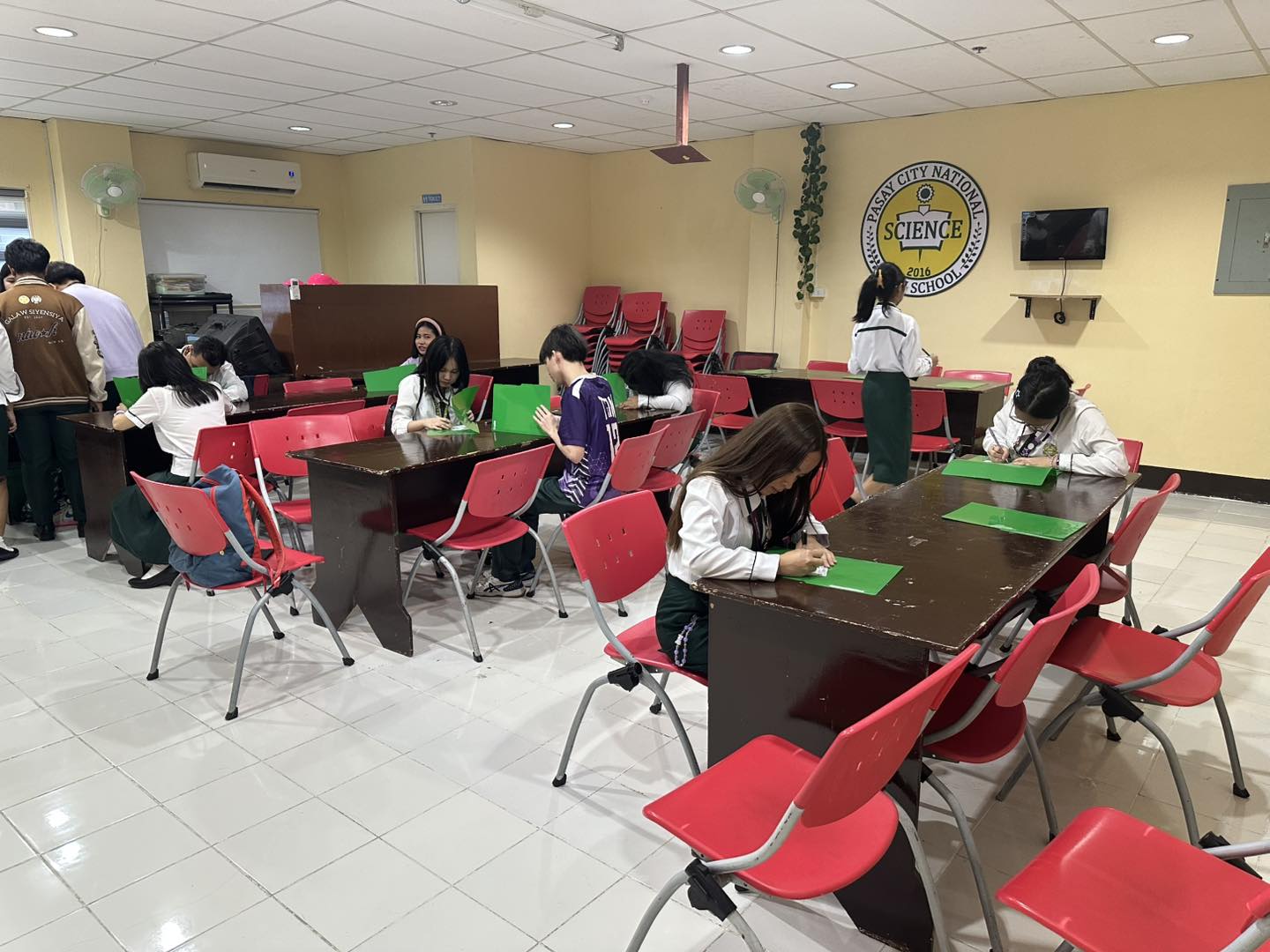
The first votes have been cast, and the race is officially on!
#ElecTQ | The first votes have been cast, and the race is officially on! As Pasay City National Science High School prepares for tomorrow’s high-stakes student elections, early ballots have already started shaping the battlefield. Delegates for the Regional Schools Press Conference and students with research obligations secured their votes today through traditional paper-and-pen voting—a crucial first move in what promises to be an electrifying electoral showdown. But the real action is just beginning. Tomorrow, the rest of the student body will make their voices heard through Google Forms, and the competition is only getting fiercer. Xyrel James Canonoy, Editor-in-Chief of The Quantum, was the first to cast a vote. His message to Pascians is: “This election isn’t just about choosing names—it’s about understanding who you’re voting for and why. An informed vote is what truly matters.” Zorah Noah Diaz, a researcher and Grade 12 – Quisumbing’s President, urged her batchmates to participate, emphasizing that despite being on their way out, the senior class should aim for a 100% turnout. “We may be graduating soon, but our votes still shape the future of Pasay Sci. Let’s set the standard and make this election count.” Will the early votes set the tone for an unstoppable victory, or is a last-minute upset on the horizon? The battle for student leadership is in full swing—and there’s no turning back now.

Mirrored Realities
By: Shaun Mustang Jacinto & Paul Angelo SalvahanPublication: Angelique Inlong Schools have always mirrored our society. From price hikes to social dynamics, it’s a microcosm of what the ‘real’ world is. School elections, for instance, mimic well the nuances and trends we see in local and national elections. Ideally, they offer us students a democratic process that gives where they majority selects their supposed rightful leaders. But what happens if that power bears no brawn and intelligence? Would cutting the head of the snake solve the problem, or would fostering an environment unfit for a snake to wreak havoc be a better course of action? Due to their striking resemblance to larger-scale elections, school elections play a critical role in raising a generation of voters. However, this similarity also implies that the same deep-rooted issues—political dynasties, monopolized leadership, and voter ignorance—are present even at the school level. One particularly concerning trend is how certain candidates benefit from political affiliations tied to previous administrations. This holds true in Pulse Asia’s last preference survey for the upcoming senatorial election, when familiar surnames dominated the top 14 spots most of which are re-electionists and the rest coming from known political dynasties. They wouldn’t be able to do this without their own way of deception however, which is why on top of their engraved names in the mind of the people, their delusive campaigning also plays a huge factor to their triumph. Take for example the ‘Alyansa para sa Bagong Pilipinas’ partylist leveraged off of their slate filled of “experienced” candidates who already once held positions in the legislative and local governments. The perfect concoction that deludes the masses, requiring a blaring wake-up call to break free from these illusions and recognize the minimal impact flashy candidates have made during their time in service. Credit grabbing and unnecessarily lengthy credentials are the shadows that dim the light to this reality. The very issues that plague national and local elections hide in the underbelly of school elections, reinforcing the idea that our political problems are systemic rather than incidental. Just as in larger-scale elections, school elections tend to favor name recognition over merit, reward performative and populist leaders over genuine service, and create a cycle where the same people retain power. This mirrors the deeply embedded political dynasties and patronage systems that cripple Philippine politics, where elections are less about democratic representation and more about maintaining control. One clear example that exacerbates this is the “vote straight” culture in school party systems, where students are encouraged to elect an entire slate rather than evaluating individual candidates based on merit. Albeit party affiliations can provide structure, they often serve as pylons for exclusivity, prioritizing alliances over competence. This mimics the way political parties in the Philippines operate, particularly in the party-list system, which was meant to give marginalized groups representation but has instead been co-opted by elite interests. Just as established names dominate the ballots in national elections, school parties often become monopolized by the same groups, making it difficult for independent candidates or newcomers to break through this chain. This culture discourages critical voting and reinforces blind loyalty over informed decision-making. The sad metaphor of “musical chairs” aptly describes this cycle of Philippine politics: the same names resurface, ensuring that power remains within the same networks. It is clear that voter education alone cannot fix an electoral process designed to benefit the powerful. While it is often seen as the key to better election outcomes, education means little when the system itself encourages popularity over substance, exclusivity over inclusivity, and familiarity over fresh leadership. Without institutional reforms that address elite control, unregulated campaign practices, and voter apathy, educating students on how to vote wisely will not be enough to disrupt the status quo. This is why school elections should not be treated as just mock elections, but as opportunities to demand and practice real democratic principles. Political change does not begin and end at the ballot box—it must start where power structures first take its form: within the confines of schools. If student elections continue to manifest the dysfunctions of national politics, then we are merely training the next generation to accept corruption, performative leadership, and political stagnation as the norm. Breaking this cycle demands continuous efforts to demand transparency, hold student leaders accountable, and push for fairer election policies within schools. Change begins at the grassroots level, not just in national government, but in the very institutions where we first learn to engage in politics.

Philippine Geography Olympiad
For the first time in history, Pasay City National Science High School competed in the Philippine Geography Olympiad series, participating in its 14th year yesterday and today, February 22-23, the country’s largest geography competition for high school students. Representatives May Relyn De Paz and Xyrel James Canonoy tackled a 50-item written exam and a challenging two-hour field exam across University of the Philippines-Diliman, navigating from Quezon Hall to the wetlands along University Avenue, the playground at UP Integrated School, and the College of Arts and Letters. Trained by Mr. Emerson Constantino and accompanied by Mrs. Mary Grace Dela Cruz, the two-day competition ended with the bets exiting Sunday morning, after the qualifying rounds. Their participation however marked an important milestone, setting the stage for future contenders.

Defying Gravity in Pisika-alaman 2025!
Defying Gravity in Pisika-alaman 2025! Pasay City National Science High School’s team—Maxine Arella Reyes, Carl Niño Carasco, and Heiza Adeth Banaag—made a strong showing in Pisikaalaman 2025, the country’s premier high school physics competition. As one of only twenty four teams to qualify for the finals, they competed in the face-to-face-format event held at the National Institute of Physics, UP Diliman, on February 22. Under the mentorship of Sarah Lee Fedelin Delgado, the team tackled complex physics problems with determination and skill, proudly representing the school in its historic appearance in the competition.