


Written by: Chloe Arabella D. Cristobal
Copyedited by: Carlos Reily Agripa
Publication by: Angelique Inlong
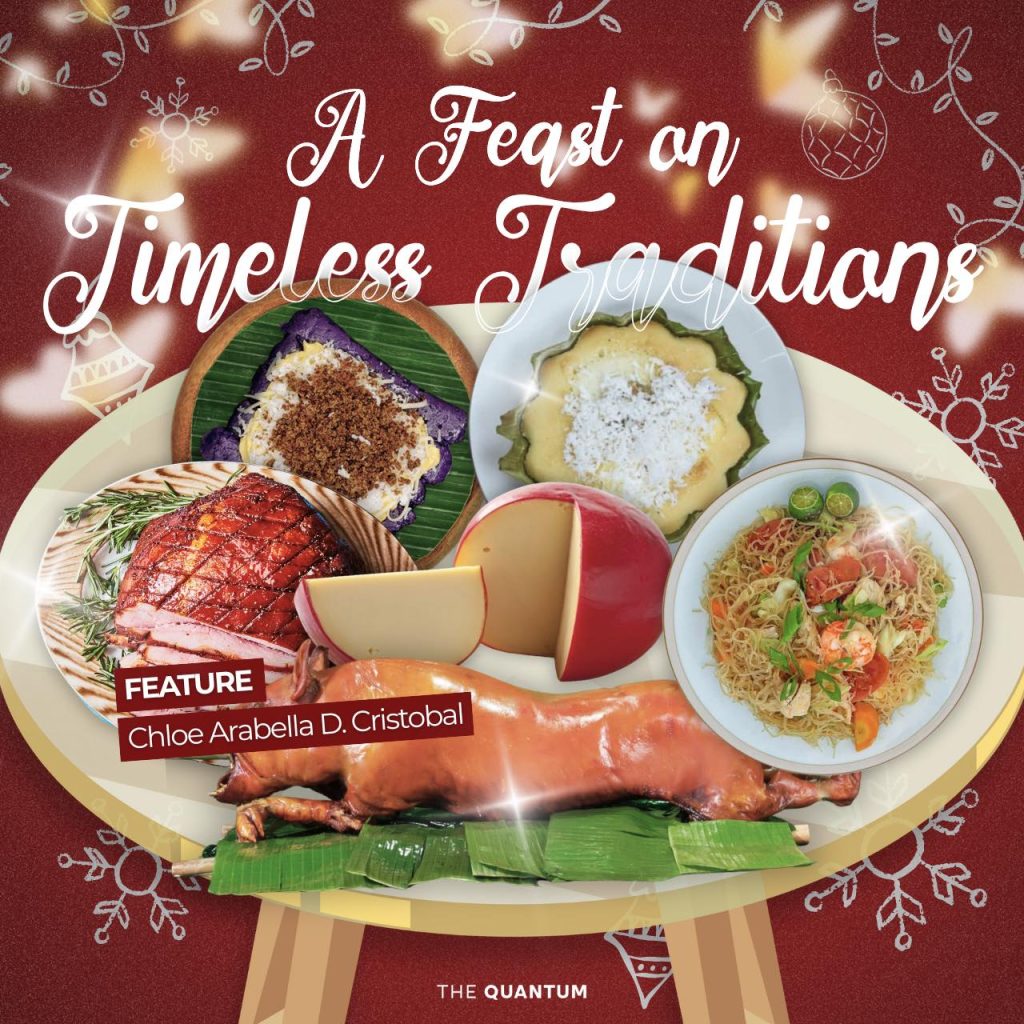
It’s the most wonderful time of the year—a phrase that holds true throughout the joys of the festive holiday season, and especially stands firm as we set our plates at the grand Christmas table, filled with stories of heart and heritage! In the Philippines, it is well known that a celebration is best enjoyed with a feast—but not just any ordinary one. For a feast to be considered truly legendary, it must celebrate three timeless values: flavor, family, and festivities. Together, these elements transform dishes into more than just a grand meal; they become an encapsulation of the love, hope, and faith enduring in the Christmas season.
Have you ever sniffed out the scent of butter and toasted coconut as you exit the opulent church doors and almost melted on the spot? Well, you’re not the only one. Puto bumbong has been a staple in the Simbang Gabi (dawn masses before Christmas) experience since the 19th century, serving as a warm snack for churchgoers to enjoy after an inspiring sermon. But it does not only stand out because of its enticing smell, the unique ingredients and the way it is cooked also seems to catch the eye of many. The purple sticky rice steamed inside a bamboo tube combined with the creamy butter, the nutty toasted coconut, and the smoky muscovado, provide your taste buds a rich, sensory experience that you won’t be forgetting any time soon.
But that’s not the only dessert you might see outside your church halls! Bibingka, a soft rice cake baked in banana leaves and topped with unique, savory toppings, is one of the most iconic dishes of the Christmas season. Its origins are speculated to stem from pre-colonial offerings to deities in the form of the sweet and savory kakanin (rice cakes). However, after the Spanish rule, its indigenous roots merged with Christian belief, and have since then become a staple as a filling breakfast or snack before entering the faithful chambers.
During the days leading up to Christmas, the streets are usually lined up stalls of various sweet and savory dishes and desserts, but the feast doesn’t end there! A common essential in every table during Noche Buena is the Hamon and Queso de Bola platter. Originating from Spanish origin and being sold by Chinese merchants, these maritime staples symbolize success and good fortune during the season. Families eagerly slice into the round, salty-sweet hamon and pair it with the rich, earthy cheese, creating a timeless combination that can easily beat out any of your favorites.
The notion of long life and prosperity is very appealing to us Filipinos. Besides its delicious taste and tempting aroma, Pancit Bihon is notorious for its mused ability to add more years to one’s time on Earth. Introduced to the Philippines by Chinese traders, this dish is a mixture of flavors and cultures alike. After centuries of adaptation, local ingredients such as toyo, calamansi, and native vegetables and meats, were incorporated to the rice noodles to bring out more depth of flavor. This Christmas course does not just guarantee you longevity, but also a satisfying mix of savory and tangy flavors that make it a standout on the holiday table.
Last but not the least, the most awaited part of every celebration: Lechon! From its crispy, golden skin to its tender, succulent meat, this indispensable dish serves as the centerpiece of every feast it takes parts of. Although its name was taken from Spanish origin (lechon translating to “suckling pig”), the practice of roasting whole pigs on a bamboo spit was already present in Austronesian culture long before. In the country, Cebu in particular is popularly known as the homeland of the iconic Filipino lechon we know and love today.
These renowned dishes shaped the dinnertime gatherings during the holiday season, weaving together the importance of family, taste, and culture. Together, along with many others, they form a feast that is not only an explosion of flavor, but a deeply meaningful collection of memories that embody the spirit of a Pinoy Christmas.