



Written by: Chloe Arabella D. CristobalCopyedited by: Carlos Reily AgripaPublication by: Angelique Inlong It’s the most wonderful time of the year—a phrase that holds true throughout the joys of the festive holiday season, and especially stands firm as we set our plates at the grand Christmas table, filled with stories of heart and heritage! In the Philippines, it is well known that a celebration is best enjoyed with a feast—but not just any ordinary one. For a feast to be considered truly legendary, it must celebrate three timeless values: flavor, family, and festivities. Together, these elements transform dishes into more than just a grand meal; they become an encapsulation of the love, hope, and faith enduring in the Christmas season. Have you ever sniffed out the scent of butter and toasted coconut as you exit the opulent church doors and almost melted on the spot? Well, you’re not the only one. Puto bumbong has been a staple in the Simbang Gabi (dawn masses before Christmas) experience since the 19th century, serving as a warm snack for churchgoers to enjoy after an inspiring sermon. But it does not only stand out because of its enticing smell, the unique ingredients and the way it is cooked also seems to catch the eye of many. The purple sticky rice steamed inside a bamboo tube combined with the creamy butter, the nutty toasted coconut, and the smoky muscovado, provide your taste buds a rich, sensory experience that you won’t be forgetting any time soon. But that’s not the only dessert you might see outside your church halls! Bibingka, a soft rice cake baked in banana leaves and topped with unique, savory toppings, is one of the most iconic dishes of the Christmas season. Its origins are speculated to stem from pre-colonial offerings to deities in the form of the sweet and savory kakanin (rice cakes). However, after the Spanish rule, its indigenous roots merged with Christian belief, and have since then become a staple as a filling breakfast or snack before entering the faithful chambers. During the days leading up to Christmas, the streets are usually lined up stalls of various sweet and savory dishes and desserts, but the feast doesn’t end there! A common essential in every table during Noche Buena is the Hamon and Queso de Bola platter. Originating from Spanish origin and being sold by Chinese merchants, these maritime staples symbolize success and good fortune during the season. Families eagerly slice into the round, salty-sweet hamon and pair it with the rich, earthy cheese, creating a timeless combination that can easily beat out any of your favorites. The notion of long life and prosperity is very appealing to us Filipinos. Besides its delicious taste and tempting aroma, Pancit Bihon is notorious for its mused ability to add more years to one’s time on Earth. Introduced to the Philippines by Chinese traders, this dish is a mixture of flavors and cultures alike. After centuries of adaptation, local ingredients such as toyo, calamansi, and native vegetables and meats, were incorporated to the rice noodles to bring out more depth of flavor. This Christmas course does not just guarantee you longevity, but also a satisfying mix of savory and tangy flavors that make it a standout on the holiday table. Last but not the least, the most awaited part of every celebration: Lechon! From its crispy, golden skin to its tender, succulent meat, this indispensable dish serves as the centerpiece of every feast it takes parts of. Although its name was taken from Spanish origin (lechon translating to “suckling pig”), the practice of roasting whole pigs on a bamboo spit was already present in Austronesian culture long before. In the country, Cebu in particular is popularly known as the homeland of the iconic Filipino lechon we know and love today. These renowned dishes shaped the dinnertime gatherings during the holiday season, weaving together the importance of family, taste, and culture. Together, along with many others, they form a feast that is not only an explosion of flavor, but a deeply meaningful collection of memories that embody the spirit of a Pinoy Christmas.

Christmas Shines in Five Points
Written by: Raieli Rico Paul L. DizonCopyedited by: Jeyana Sophia CaparrosPublication by: Sofia Divinagracia As the Christmas season begins in the Philippines, streets, homes, and churches alike glow with the warm, subtle light of the parol—the iconic Filipino Christmas lantern. More than just a simple light source and decorative object, it is a powerful representation of the light that radiates hope, faith, and the fiesta-like Filipino personality embedded in each of us, never to be extinguished. Its presence not only indicates the arrival of the Christmas season but also reminds Filipinos of the values deeply rooted in their culture and still very much alive today. The traditional parols have the shape of a star with five points which signifies the star that illuminated the night of Jesus Christ’s birth. This is the same star which Three Kings used as their guide to the place where the Baby was born. At first, it was a very basic light source—cheap in materials and simple in design. Materials such as bamboo and papel de hapon (Japanese paper) were used to make it, qualities that really portray the creativity and resourcefulness of the Filipinos. Nowadays, these lanterns have become more complex in design and more materials have been used such as capiz shells, plastic, LED lights, and even recycled materials. Making parols has not only been a tradition observed by the people but has also become a major cultural and community activity. Most especially in Pampanga which is known as the “Christmas Capital of the Philippines.” Usually, the production of parols is done with the work of neighbors and relatives who collaborate with one another, thereby strengthening their relationship and ensuring that traditions are continuously passed on from generation to generation. Today, parol festivals and competitions are held not only to draw attention to the excellent workmanship of the people but are also a means of promoting local identity and pride. Lately, the parol has been kept up with the current times and hence is an embodiment of innovation while still retaining its traditional sense. One example is the use of LED lights that can be controlled to display different designs in the shopping centers. The Filipinos have come up with different ways in which the parol can be newly interpreted while at the same time, its main idea is kept intact. The core of the parol is still the same—to give light, cheer, and happiness during the Christmas period, regardless of these recent changes. More than that, it is also representative of the indomitable Filipino spirit. For instance, when the country is struck by a calamity or if it is a time of difficulty and uncertainty, the simple gesture of putting up one is an indication of trust and hope for better times to come. It assures the Filipino people that no matter how dark it is during the night, the light will indeed find its way through. Aside from their visual appearance, it is a symbol of light conquering darkness which is something that definitely touches the Filipino people deeply and especially during their hardships. Whether they are hanging on the front of very simple homes or are paraded in the magnificent public areas. It remains a powerful beacon of hope, unity, and enduring joy—illuminating not only the streets but also the Christmas season with the resilient spirits of the Filipino people.
Sa Likod ng Paglimot
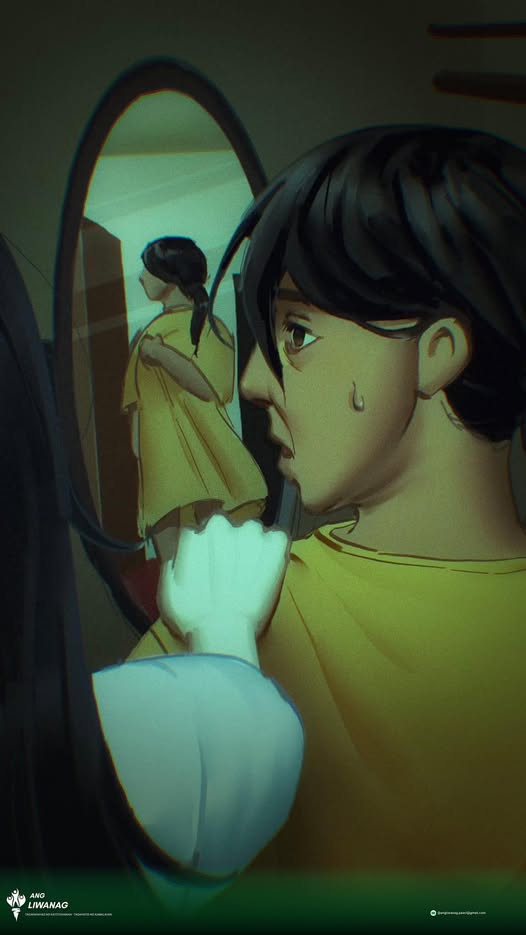
| Claire Domenden| Andrea Urbina Paano kung sa bawat araw na lumilipas ay nararamdaman mong unti-unting tinatraydor ka ng sarili mong utak? Na tila bawat alaala ay pinupunit ng panahon, at bawat sandaling dumaraan ay nagiging isang tanong na walang sagot. Limot ko na kung anong araw ngayon, maging kung saan ko nailapag ang aking salamin. Minsan, hindi ko na rin matandaan ang daan pauwi. Siguro dala na ito ng aking pagtanda o marahil ay parusa ng paglimot. Pero buti na lang, nandiyan si Isabel. Si Isabel ang laging kasama ko tuwing umaga. Siya ang nag-aabot ng suklay, ang nag-aayos ng buhok ko kapag nanginginig na ang aking mga kamay. Kapag naman nalilimutan ko ang daan pauwi, siya ang aakay sa akin. Si Isabel na marahang humahawak sa aking braso at magaan ang paghaplos ngunit palaging malamig ang mga palad. Hindi ko alam kung saan ko siya unang nakilala. Basta tanda ng utak ko, matagal ko na siyang kakilala. Ngunit sa tuwing sinusubukan kong maalala, parang may ulap na bumabalot sa isipan ko, puting makapal na usok na may halong malamig na hangin. Siguro dala na rin ng aking kagustuhan na siya’y maalala kaya tuwing gabi ay dumadalaw siya sa panaginip ko. Lagi siyang nandoon, nakatayo sa gitna ng kalsada, nakaputi, at umiiyak. Minsan basang-basa ng ulan, minsan duguan ang palad. Bakit paulit-ulit? Bakit parang siya ang hindi nawawala kahit lahat ng iba’y nalilimutan ko? Nais ko sanang ipagmalaki sa aking mga kapitbahay si Isabel, na parang anak ko na siya. Pero palagi nilang sinasabi na sarili ko lang daw ang kinakausap ko tuwing umaga. “Eh paano nila nasasabi ’yon?” tanong ko minsan. “Andito si Isabel, sinusuklayan nga ako, nakangiti pa sa kanila.” Ayaw kong masaktan si Isabel, kaya akin siyang kinausap. “Bakit hindi ka nila nakikita, anak? Nakasalamin naman ako, ah. Kita naman kita.” Ngumiti lang siya. “Huwag mong pansinin, Aling Tina. Mahina lang talaga ang pakiramdam nila.” Pero habang tumatagal, may kakaibang lamig sa paligid tuwing kasama ko si Isabel, hindi lamig ng hangin, kundi lamig na gumagapang sa ilalim ng balat. Kapag hinahawakan niya ang mga kamay ko, parang may humihigop ng init mula sa katawan ko. At sa tuwing tumitingin siya sa malayo, tila ba’y may mga aninong naglalakad sa paligid, mga aninong walang mukha, walang pinatutunguhan, tila naghihintay lamang ng isang tawag. Minsan, sa gabi, maririnig ko ang mahinang pagkaluskos sa labas ng bintana. “Isabel?” Mula sa dilim ay lilitaw siya, maputi, walang tunog ang mga yapak, at may basang buhok na nakadikit sa pisngi. “Ang lamig naman ng gabi,” sabi ko pa nga minsan. Ngumiti siya. “Mas lalong lalamig kapag wala ka na.” Isang gabi, nang pinakamaliwanag ang buwan, tinanong ko siya, “Isabel, paano nga ba tayo nagkakilala?” Tahimik siya sandali bago nagsalita. “Aling Tina, naaalala mo pa ba kung nasaan ka noong gabi na umulan ng malakas?” Pinilit kong isipin. Dumaloy sa isip ko ang tunog ng kulog, ang pag-ugong ng gulong sa basang kalsada, at isang malakas na bangga. Tumama ang liwanag ng ilaw sa mukha ni Isabel, puting-puti, at sa kanyang mga mata, may piraso ng sasakyan na nakabaon. “Hindi ko matandaan,” sabi ko habang nanginginig. Lumapit siya. Hinawakan ang kamay ko, malamig, nakakatakot. “Doon tayo unang nagkita,” bulong niya. “Ako ’yung babae sa kalsada. Hindi mo ako nakita agad.” Nanlamig ang dugo ko. “A-anong ibig mong sabihin?” Ngumiti siya, at sa unang pagkakataon, nakita ko kung gaano kadilim ang ngiti niya. “Matagal na akong ligaw, Aling Tina,” mahinang sabi niya, halos pabulong. “Matagal na kitang hinihintay. Kaya ngayon…” Biglang lumamig ang paligid. Umuusok ang hininga ko kahit nasa loob kami ng bahay. Ang mga anino sa paligid ay gumagalaw, unti-unting lumalapit. Ang liwanag ng bumbilya sa kisame ay kumurap, at sa salamin sa tapat namin, nakita ko, wala si Isabel sa repleksyon. Paglingon ko, nasa likod ko na siya. “…nais kong ako naman ang samahan mo,” sabi niya, bago ko maramdaman ang malamig niyang kamay sa aking batok. Pagkatapos no’n, tumigil ang lahat. Tahimik. Walang hangin, walang init, walang takot. At sa wakas, naalala ko na. Ang ulan. Ang sigaw. Ang babae sa kalsada.

Gintong Singsing
| Althea D. Loro| Leigh Ann Prado
The Clock Beneath Our Feet
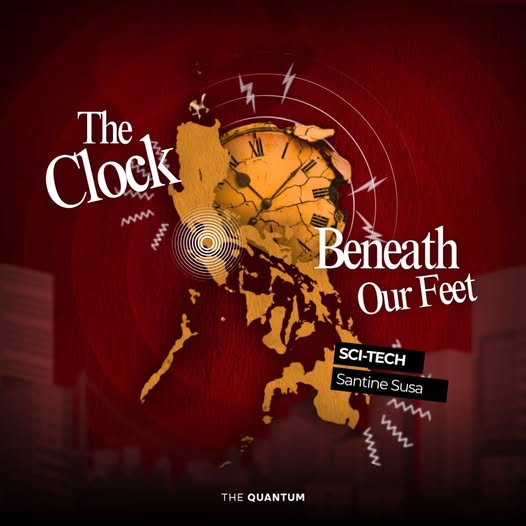
by: Santine Mauritius SusaCopyedited by: Joebbie GauganoPublication by: Rianne Lopez and Yelena Fabricate The earth does not roar without a reason. Last week, a series of powerful tremors off Davao Oriental jolted the Philippines awake—literally and figuratively. Within hours, twin major quakes struck the same offshore zone along the Philippine Trench, shaking cities from Mindanao to Visayas. Tsunami alerts blared and spilled into neighboring nations, aftershocks rippled through the region, and a nation accustomed to shaking was once again reminded of its uneasy balance on the Pacific’s fiery edge. Scientists call this a “doublet earthquake,” —two major quakes that strike close together in both space and time. Instead of a single rupture and a slow fade of aftershocks, a doublet signals that one fault’s slip may have triggered another nearby. The Philippine Sea Plate, constantly diving beneath the archipelago, carries immense tectonic pressure. When one portion breaks, stress shifts to its neighbors, sometimes setting off a rapid cascade. That’s why this recent cluster of quakes—from Cebu in September to Davao in October—had scientists pay attention. Clustering doesn’t mean the ground is “angry,” but it does reflect how interconnected the Philippines’ faults truly are. Earthquakes rarely occur in isolation. When one section of a fault releases energy, nearby areas may suddenly be closer to their breaking point. In a country crisscrossed by multiple faults, this domino effect can stretch over weeks or months. The Davao doublet is one example: a large quake may be followed not just by aftershocks but by related quakes within the same tectonic system. Similar clustering has been recorded in Japan, Chile, and Indonesia. In 2011, Japan’s devastating Tōhoku earthquake was followed by dozens of strong shocks along adjacent faults over the next year. In Chile, a 2010 quake triggered several magnitude 6+ tremors within months as stress redistributed along the South American subduction zone. These examples show that once one part of the earth’s crust gives way, others nearby can quickly follow. Could such a cluster happen in Manila? Experts say yes, though in a different form. The capital sits atop the Valley Fault System, a network running beneath Quezon City, Marikina, Pasig, and Taguig. Unlike deep-sea quakes, this fault can trigger shallow, violent shaking that threatens dense urban areas. A magnitude 7.2 rupture along the West Valley Fault, which the Philippine Institute of Volcanology and Seismology (PHIVOLCS) has long warned about, could cause widespread damage—collapsing older buildings, splitting roads, and knocking out power and water lines across the metro. In this kind of inland cluster, one strong event could be followed by several smaller quakes in nearby fault segments, prolonging damage and panic. Off the western coast also lies the Manila Trench—a deep subduction zone capable of generating powerful offshore quakes above magnitude 8 and large tsunamis. Scientists note that while it is less active than the Philippine Trench, its potential impact is far greater because it faces the highly populated coasts of Luzon. A major slip along the trench could send tsunami waves toward coastal towns in Zambales, Bataan, and even the Manila Bay area within minutes. In a worst-case scenario, residents might only have 15 to 30 minutes to move to higher ground. Historical records suggest that events like this may have occurred centuries ago, their traces buried in old coastal sediments now being studied by geologists. Science provides warning, but preparedness ensures survival. Strengthening monitoring systems, enforcing building codes, and conducting regular drills remains as the country’s best defense. Earthquake-resistant design should be seen not as a cost but as a safeguard. Public awareness, meanwhile, turns panic into reflex—knowing where to go and what to do the moment the ground moves can save lives. The Philippines cannot escape its geography, but it can adapt to it. Clusters like those in Mindanao remind us that the ground beneath our feet is alive constantly adjusting and constantly storing energy. In a country built on moving earth, preparedness is not paranoia—it is progress. The tremors may fade, but the lesson endures: the next cluster may strike anywhere, even beneath the capital. It is not a matter of if, but when.

Manunudlo ng Bukas
| Ma. Jhoanna Muega| Leigh Ann Prado Kapos ang aking hininga habang binabaybay ang mahabang pasilyo. Kasabay nito ang lagi’t laging pagsulyap sa mga kamay ng orasan. Ilang minuto na akong huli sa klaseng itinuturing ko nang pangalawang tahanan. Sa pagpihit ko ng pinto, naroon ang mga matang tila buwitre kung sa aki’y tumingin. Higit pa sa lahat, naroon ang matang kanina pa ako minumulto, ngunit patuloy akong dinadalaw. Ang mga mata ng aking guro, nagtataka, at kung minsan pa’y nakakunot ang noo, nag-aasam ng sagot kung bakit ako nahuli. Marahil ay nagtatanong din kayo, paano nga ba humantong sa ganito? Guro – Isang tao na nagbibigay ng edukasyon para sa mga mag-aaral. Sa Cebuano, ang tawag sa kanila ay “Magtutudlo,” “Manunudlo” sa Hiligaynon, o “Manursuro” para sa mga Ilocano. Napakarami man ng kanilang katawagan, isa lang naman ang kanilang hangad – ang magturo, magbigay-aral, o maghabi sa mga kabataang susunod sa kanilang yapak. Narito ako ngayon, nanatiling nakatayo sa apat na sulok ng silid-aralan, habang ang aking guro ay naghihintay ng kasagutan. Ngumiti ako kahit napipilitan, at sinabing nahuli lamang ako ng gising. Patuloy akong siniyasat ng guro, ang akala ko’y oras para sa sermon, pinaupo niya na lamang ako at patuloy na nagturo. Habang siya’y tinatanaw, muli na naman akong namangha sa kanyang pasensya at pang-unawa. Sa isang marikit na alaala, aking muling natandaan ang hirap na aming napagdaanan, mula sa ensayo upang manalo sa isang katangi-tanging patimpalak. Tumataas ang gilid ng aking bibig kapag natatandaan ang mga turo niya, kahit na sumapit na ang gabi. Kahit na mahirap, patuloy kaming nag-ensayo, natuto, at nagsanay. Ang totoo, nahuli ako sapagkat ako’y naghahanda para sa patimpalak na aming pagtitipunan, kasama ang gurong nagtuturo sa aking harapan. Hindi man alam ng aking kasamahan, ngunit kita ko ang determinasyon ng Guro, na sa likod ng kanyang nakakatakot na mantra, ay ang pagod ngunit pursigidong magbigay-aral para sa aking mga kapwa mag-aaral. Sa mga araw na kami’y nagsasanay, lagi siyang may dalang libro’t papel, ngunit hindi lamang mga mahahabang konsepto ang kanyang itinuturo, kung hindi pa’ti na rin ang mga kaisipan sa totoong hamon ng buhay. Dito, aking napagtanto na si “Guro” ay hindi dapat natin kinatatakutan, sapagkat handa silang maging kabalikat sa mga oras na kailangan natin ng kanilang gabay. Siyang tunay, magulang ang unang magtuturo ng mga asal sa kanilang mga supling. Ngunit, ang kasunod nito ay ang mga Guro naman ang magtuturo sa kanilang mag-aaral kung paano matuto at umangkop sa agos ng buhay pagkatapos ng mga araw ng aking pagkabata. Kung kaya’t ang mga “Manunudlo” ay bigyan natin ng pagpupugay dahil hindi lamang sila gabay sa ating mga papel, sila rin ang mga haligi ng tagapagsanay na huhubog sa mga susunod na magdadala ng karangalan ng bansa.

Quiet Longings
by: Raieli Rico Paul DizonCopyedited by: Joebbie GauganoPublication by: Claire Mendoza Walking along the streets of Manila, I was immersed in a bittersweet sensation of sadness and nostalgia. The entire city was buzzing with the sound of jeepneys and pedestrians. It was both busy and loud, yet untold stories still remained. I remember staring blankly at streets and wondering about how many lives there are, each of them with a different tale of loss, love, and hope. Watching Dwayne Baltazar’s “Gusto Kita with All My Hypothalamus” again brought that exact feeling back to me—the quiet messages hidden in the ordinary. A Loud Love Filipino films so often broach the topic of love in loud, dramatic, almost operatic fashion—screaming love confessions of devotion in the rain, or destiny already decided. Baltazar does the exact opposite, it tells us of the lives of four men: a widower, a security guard, a thief who lifts purses, and a student—whose lives intermingle Avenida, but are tied to one another in a desperate yearning for a woman named Aileen. It comes close to being a tale of obsession, but the film avoids this by grounding the feelings of each character in something fundamental to being human. You don’t get a dramatic confrontation, a neat resolution. Instead, Baltazar permits the narrative to gradually but carefully unravel so we can experience in still and obscure ways how loneliness, desire, and love develop. A Deep Yearning The movie whispers the reality of what it’s like to hunger for touch in a city that keeps people invisible. The characters’ longing for Aileen feels less about her as an individual and more about what she represents: a vessel that can satiate their longing, a symbol of tenderness in their lonely lives. By the end, it’s clear that the woman they desire has become a mirror—reflecting back their own vulnerabilities. Some may say that the film is perplexing at first or that it doesn’t provide enough answers, but I would argue that this is precisely its charm. Baltazar doesn’t spoon-feed us resolution because reality rarely does. The setting, Avenida itself becomes a character, a witness to the fleeting glances, unspoken words, and desires too fragile, too complicated to articulate. An Atypical Ending The movie stands out because it recasts the idea of Pinoy love stories. Not fate, not grand gestures, it reminds us how it works in life—how it’s the Hypothalamus’ stimulus of our wanting and being-in-love feeling, the ability to feel a want for connection. It was seeing it and feeling as if being enlightened to a secret: that it is within possibility for the smallest of interactions in the most ordinary of environments to touch something within us deep, stirring something profound, whether it can do us any good or not. Gusto Kita with All My Hypothalamus is not just a film of yearning and love; it is a slice of life about what it means to be human in a city that both connects and isolates. It’s a reminder that sometimes, the heart’s deepest yearnings are not for dramatic love affairs. That even through noise, everyone has their quiet longings, wanting to be seen, even for a moment only.

Payapang Isipan; Panatag na Kabuhayan
| Vic Molina| Cassandra Fallena Ngayong napaka-bilis ng panahon—’di mo akalain na magpa-Pasko na naman. Nadarama na ang himig ng Pasko dahil ang petsa ay kasalukuyang nasa ‘Ber Months’ na kung tawagin. Nasa paniniwala na ng mga Pilpino na ang Pasko ay purong ngiti at saya ang nadarama—ngunit, lahat nga ba ay ganito ang nararanasan? Sa loob ng maraming taon—ang isyu tungkol dito ay nananatiling tahimik at naghahangad na mabigyan ng sapat na pansin. Isang isyu na magbubukas sa ating isipan sa kung ano ang katotohanan sa likod ng mga ngiti at tagumpay na nasisilayan sa mga mukha. Sa panahon ngayon na umaarangkada ang teknolohiya at maunlad na ang isip ng mga mamamayan ay walang dahilan upang manahimik na lamang—Kailangang mapag-usapan, kailangang mabigyang-solusyon. Sa PIlipinas, simula nang malagdaan ng dating pangulong Fidel V. Ramos ang Proclamation no. 452 noong 1994 ay nagsimula na rin ang paglaganap ng Mental health Awareness na may layuning magbigay kaalaman at kahalagahan sa lagay o sitwasyon ng mga isipan ng mga indibidwal. Ito ay ipinagdiriwang tuwing ikalawang linggo ng Oktubre at patuloy na isinasagawa mapasahanggang ngayon. Kasabay ng pag-usbong nito ay ang paglitaw ng mga NGO’s o Non-Governmental Organizations na siyang nagpapatupad ng mga seminar, talks, at online campaigns patungkol dito. Ito ay isa sa mga paraan na nakatulong sa mas lalong pagpapalawak ng kaalaman at kahalagahan ng Mental Health. Nang malagdaan ng dating pangulo ang Republic Act No. 11036 – Mental Health Act noong Hunyo 20, 2018 ay mas lalong napagtibay ang pagpapatupad nito. Sa tulong nito ay naituturo na rin sa parehong pampubliko at pribadong paaralan ang layunin at sa kung paano ito makatutulong sa milyon-milyong tao sa mundo. Ito rin ay sumailalim sa malawakang pagpapakalat—mapa- online man o sa paaralan. Ngayon sa kasalukuyan ay patuloy na napapalawak ito dahil sa tulong ng LGU’s at iba pang programa na hawak ng gobyerno. Sa ganitong paraan ay mas mapapabilis ang pagpapalawak ng kaalaman para rito. Ito rin ay tiyak na makaiimpluwensya sa maraming tao pagkat ito ay isang batas na sinusunod ng mga indibidwal. Sa paglipas ng panahon, kasabay ang pag-unlad ng iba’t ibang makinarya, iba’t ibang teknolohiya—Ngunit, nasaan ang Mental Health? aminin man o hindi, minsan na lang talagang pag-usapan at pag-isipan ang ganitong isyu, lagi na lamang itong nagtatago sa mga anino ng mga napapanahon at mas sikat na isyu. Bilang isang estudyante, isa-isa mang mga boses, ngunit kapag pinagsama ay tila isang makapangyarihang boses na nanghihingi ng pansin at halaga sa mga mamamayan. Ang pagbabago at pagpapahalaga ay nagsisimula hindi sa paaralan, kundi sa atin mismo; Ang pagbabago ay nagsisimula sa atin, patungo sa kapayapaan na ating kakamtin.

Direk Her: Filipina Film Masterminds
by: Danella De VeraCopyedited by: Orange AlcarazPublication by: Yelena Fabricante The credits would always flash only after a movie. Most people—despite watching what they would say, “the pinnacle of cinema”—would not bother to stay and acknowledge the ones behind it. Little do we know that most of the films we watch are staged by the ones beyond the ruthless, ingenious, and inventive. Behind these famous actors, trending scenes, and hard-hitting lines are the fresh minds of those who used to be unnoticed—the female mind. Along with the continuous shift from the stereotypical power to the emerging movements for women’s empowerment, there is the rise of Filipina Filmmakers. Many would think that men still dominate the filmmaking industry when, in fact, eight out of the ten highest-grossing Filipino films were directed by women. To recognize this constant growth and to honor the Filipina filmmakers of today, together with the celebration of the 5th Philippine Film Industry Month—The Film Development Council of the Philippines (FDCP), and JuanFlix recently concluded “JuanFlix Presents: Lights, Camera, Re-Action! Featuring Direk Her: The Rise of Filipina Filmmakers.” Covering the whole month of September were jam-packed screenings of iconic movies through which female directors have pioneered. One of which was a special screening of “Gusto Kita With All My Hypothalamus” by Dwein Baltazar, followed by a talkback session featuring award-winning directors: Dwein Baltazar and Sigrid Bernardo. “As a woman myself, I make it to a point to tell stories from the perspective of a woman. Because it’s always from the perspective of men.” This was the response of “Kita kita” Director Sigrid Bernardo to the question: “What is the approach of a female director in creating movies?” In history, most Filipino films had only established one role for women: full-time housewives, slaves, and merely side characters to add depth to the main hero. But for years, iconic directors like Marilou Diaz-Abaya and Antoinette Jadaone had strived to rewrite the narrative. And filmmakers like them are the ones who inspired Director Baltazar and Bernardo to pursue and continue to push through their passion for telling stories through film. Baltazar and Bernardo proudly shared their sentiments with regards to their journey into filmmaking with the influence of previous female directors in the limelight. For Director Baltazar, it was her love for films like “Kisapmata” by Mike de Leon, “Bona” by Lino Broca, and American film director and screenwriter Miranda July that influenced her to become a filmmaker herself. Whereas for Director Bernardo, it was her personal experience, seeing how her single mother pushes through the struggles of women that made her start writing stories that reflect them. Both of these talented minds, together with the female filmmakers of this generation, are a testament that our society is capable of empowering women, not just in the film industry, but also in all other aspects. Today, where discrimination against women is still evident, let us be reminded that the mastermind is the man with the plan—but the mastermind can, and will, openly be a woman.

Baha Alert! FloodCast ang Sagot: UP Scientists, lumikha ng Flood Forecasting System
| Marc Jared Sario| Leigh Ann Prado “Suspended na naman!” sigaw ng ilang mga estudyante kapag bumabagyo, na tila ba masaya dahil walang pasok, ngunit sa kabila nito ay mayroong nagtatagong kaakibat na panganib ang bagyo. Ang malakas na hangin, ulan, at storm surge mula sa bagyo ay nagdudulot ng pinsala at pagbaha at nakaaapekto hindi lang sa kapaligiran ngunit pati na rin sa buhay ng mga tao. Ngunit sa kabila ng mga peligrong ito ay mayroon tayong mga bayani, sila ang mga UP scientists na gumawa ng computer-based tool na kayang hulaan kung aling barangay at ilang tao ang maaapektuhan ng baha, 24 oras bago ito mangyari. Dahil tag-ulan na naman, talamak ang pagbaha sa iba’t ibang bahagi ng Pilipinas, ngunit dito nagpakitang gilas ang ating mga UP scientists katulong ang UP resilience Institute (UPRI) at Project NOAH scientists. Sila ay lumikha ng isang tool na gumagamit ng datos ng ulan at ilog upang tantiyahin ang lalim at lawak ng baha, kinukumpara sa populasyon ng barangay, at nagbibigay ng maagang babala sa mapa at talahanayan. Sila ay mayroong layuning magbigay ng maagap at tiyak na babala, upang tumulong sa pagkakaroon ng mas maayos na paglilikas at paghahanda, at makabawas ng pinsala sa mga pinaka apektadong lugar. Bago gamitin sa pang malawak na lugar, sinubukan muna ito sa mga binabahang ilog at barangay sa Luzon at Visayas, at nakatakdang palawakin sa buong bansa katuwang ang mga LGU. Nagkaroon ng maayos na resulta ang eksperimento at maaari itong magamit sa mga paparating na bagyo katulad ng bagyong Nando. Dahil sa bagyo unti-unting lumulubog ang Pilipinas, maraming ari-arian ang nawawasak at isa-isang kinikitil ang buhay ng mga tao. Ngunit dahil sa katalinuhan at inobasyon ng ating mga scientists ay maaaring magsalba hindi lang ng ating buhay ngunit pati na rin ang ating hinaharap na henerasyon. — Sanggunian: https://www.gmanetwork.com/…/up-scientists…/story/